Meet Sallay Sesay: Strength, Resilience, and the Future of Farming
In Sierra Leone, farming is more than a livelihood; it is a lifeline. For many, it is the only way to provide food, income, and stability for their families. Many farmers in Sierra Leone are women, single parents who farm without any help with labor. Among these farmers is Sallay Sesay, a woman whose story reflects both the challenges and the determination found across rural communities.
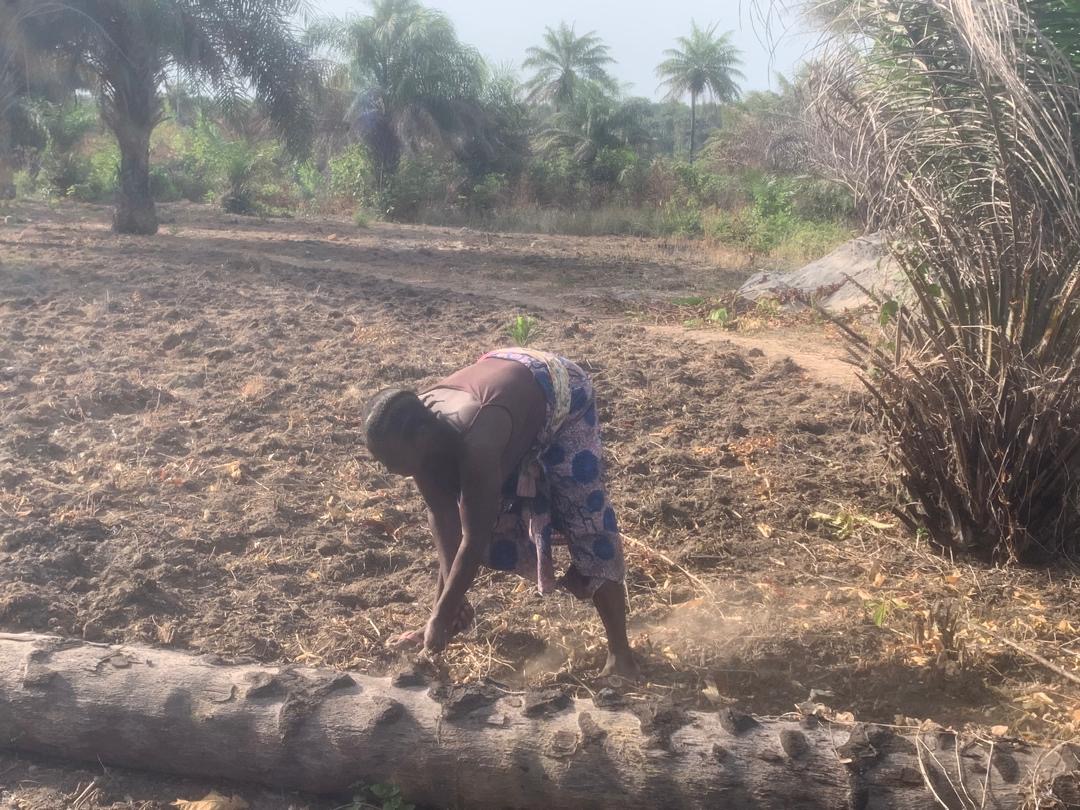
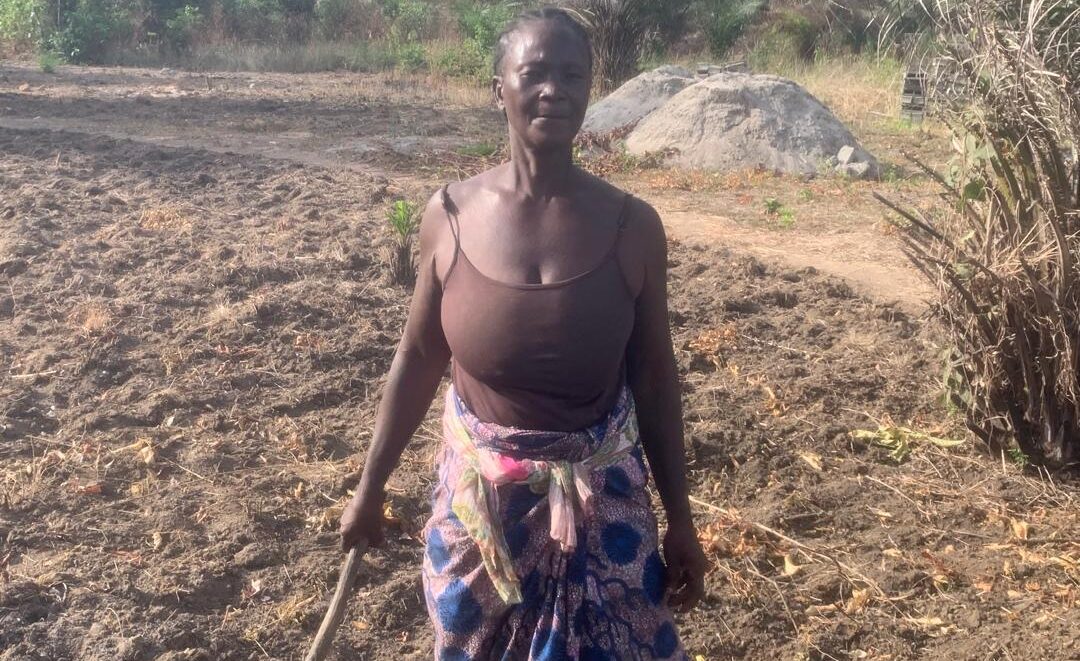
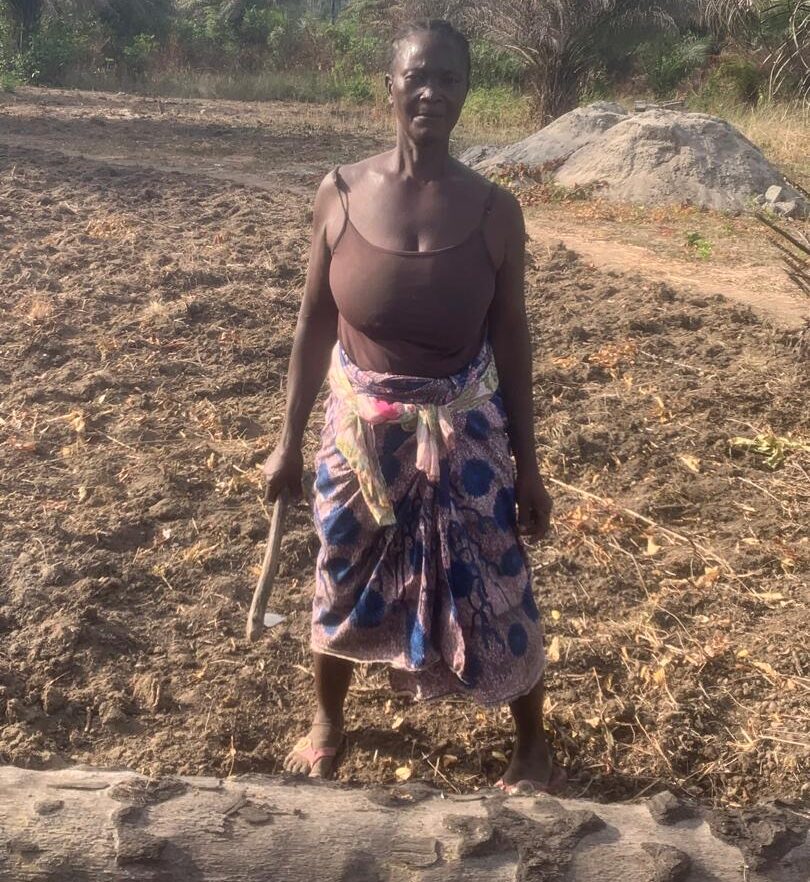
Sallay is new to our agriculture program, but she brings with her more than 30 years of farming experience. For decades, she has worked her land using only basic handmade tools, without access to modern equipment. Farming on her own, she supports 15 people who rely on her harvest.
Through SHARP’s program, Sallay now has access to seed and tool loans, as well as a work-sharing system where farmers trade labor…helping one another manage the most demanding parts of the season. Like many women in the program, she balances the responsibilities of farming and caring for others, often with limited resources but unwavering determination.
Recently, Ibrahim Kamara visited Sallay at her farm to hear her story firsthand.
Interview with Sallay Sesay
Ibrahim Kamara:
Today, we’re speaking with Sallay Sesay, a dedicated farmer with over 30 years of experience. Thank you for joining us, Sallay.
Sallay Sesay:
Thank you. I’m happy to share my story.
Ibrahim Kamara:
You’ve been farming for a long time—30 years is no small journey. What has kept you going all these years?
Sallay Sesay:
Farming is my life. It’s how I feed my family and support others. I don’t just farm for myself. I take care of about 15 people. That responsibility keeps me strong.
Ibrahim Kamara:
That’s powerful. And what kind of crops do you grow?
Sallay Sesay:
I grow groundnuts, cran-cran, potatoes, and cassava. These are the crops we depend on for both food and income.
Ibrahim Kamara:
What are the biggest challenges you face as a farmer?
Sallay Sesay:
There are many challenges. We don’t have proper shelter, funding for seeds is difficult, and getting enough labor support is not easy. Sometimes, you have the land but not the means to fully use it.
Ibrahim Kamara:
If you could point to one major need right now, what would it be?
Sallay Sesay:
Funding. With proper funding, we can buy better seeds, hire labor, and increase production.
Ibrahim Kamara:
We understand SHARP has been involved in supporting farmers. How has SHARP helped you to this point?
Sallay Sesay:
SHARP has helped with advice and some support. They encourage us to repay loans so we can continue to access seeds in the future. That system helps us stay disciplined.
Ibrahim Kamara:
That’s important—building sustainability. What more do you think SHARP could do to help farmers like you?
Sallay Sesay:
They can increase the supply. More seeds, more support. Many farmers are ready to work, but we need bigger help to grow bigger.
Ibrahim Kamara:
For someone just starting farming, what advice would you give them?
Sallay Sesay:
Be patient and serious. Farming is not easy, but if you stay committed and repay what you borrow, you will grow. Discipline is very important.
Ibrahim Kamara:
And how do you manage weeds and pests on your farm?
Sallay Sesay:
We do constant clearing and cleaning. For pests, we use simple methods like scarecrows. It’s hard work, but it helps protect the crops.
Ibrahim Kamara:
After 30 years, what gives you hope for the future of farming?
Sallay Sesay:
If we get support…real support…farming can change lives. There is food in the land, but farmers need help to bring it out.
Ibrahim Kamara:
That’s a powerful message. Thank you, Sallay Sesay, for sharing your story and inspiring others.
Sallay Sesay:
Thank you.
Sallay’s story is one of strength, perseverance, and quiet determination. But it is also a reminder that hard work alone is not always enough. Farmers like Sallay have the land, the knowledge, and the willingness to work, yet lack the resources needed to reach their full potential.
With the right support….seeds, tools, and access to shared labor…farmers can dramatically increase their harvests, provide more food for their families, and build lasting stability in their communities. A relatively small investment can make a meaningful difference, turning effort into opportunity and struggle into sustainability.
By supporting this program, you are directly helping farmers like Sallay grow more, earn more, and care for the many people who depend on them. Together, we can help unlock the potential that already exists in the fields, and ensure that farmers like Sallay have the tools they need to succeed.
-
- Sallay Sesay on the land she farms, holding her handmade tool
-
- Sallay works her fields alone